Honour Based Abuse
Honour abuse can be distinguished from domestic abuse as it normally involves more than one protagonist. Honour Based Abuse is excluded from Scottish domestic abuse legislation which recognises perpetrators of abuse as the partner, or ex-partner of the victim. It is a practice that is not confined to one specific culture or community. Research by McLaughlin (2017) highlighted that perpetrators of honour based abuse can include partners, ex-partners, family members, or community members. Being raised in an honour-based culture, where loyalty to family honour is highly valued, can heavily influence a woman’s decision, including when she attempts to leave an abusive situation.
What Does Honour-Based Abuse Look Like?
A woman or young person may be criticised or experience abuse for:
- Refusing a forced marriage
- Having a relationship that the family or community disapprove of
- Wearing make-up, clothes, or socialising in ways considered unacceptable
- Challenging family or community expectations
- Pursuing higher education, career goals, or ambitions outside of marriage
- Separating or divorcing
- Talking to or being associated with certain people
- Disagreeing with the family or community’s socio-cultural practices and traditions.
Learn More
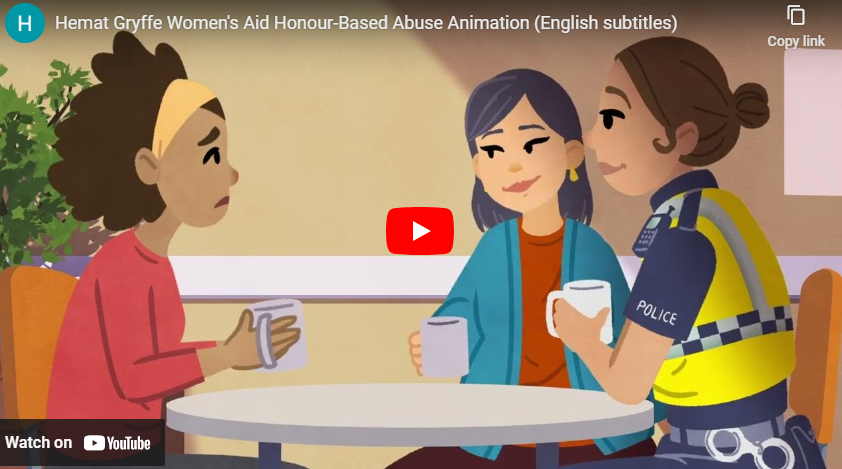
Hemat Gryffe Women’s Aid has developed an honour based abuse animation in partnership with Police Scotland to raise awareness and explain honour-based abuse.
Read more on Honour-Based Abuse in Scotland: Evidence and pathways to strengthen protection for victims by Dr Elaine McLaughlin, Dr Scott Grant, Mhairi McGowan, Professor Elizabeth Gilchrist and Dr Rhonda Wheate.